Don't like ads?
We don't either, but they help us to provide this service for free. If you block ads, but use this service regularly, please consider a donation to help us maintain and improve Voronator.com.
We don't either, but they help us to provide this service for free. If you block ads, but use this service regularly, please consider a donation to help us maintain and improve Voronator.com.
A Voronoi pattern divides a surface into cells: you scatter points on it, and each cell is the area that is closer to its point than to any other point. The borders between the cells form an irregular net that looks natural – you find it on a giraffe's skin, in dragonfly wings, in leaf veins, in dried mud and in soap foam.
The name comes from the Ukrainian mathematician Georgy Voronoy, who described these diagrams in 1908 (Descartes and Dirichlet had used the idea before).
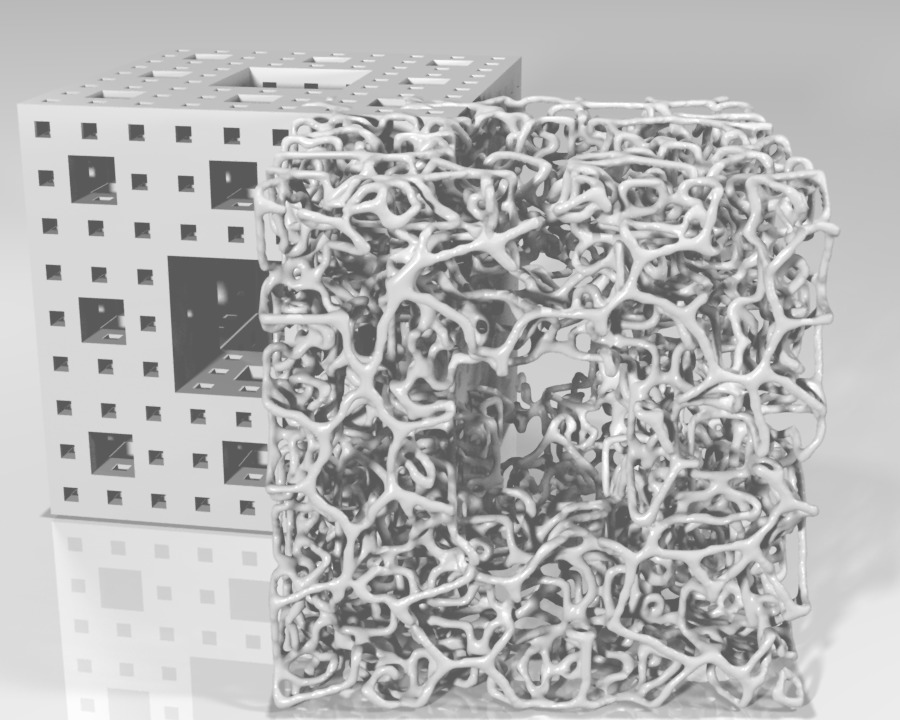
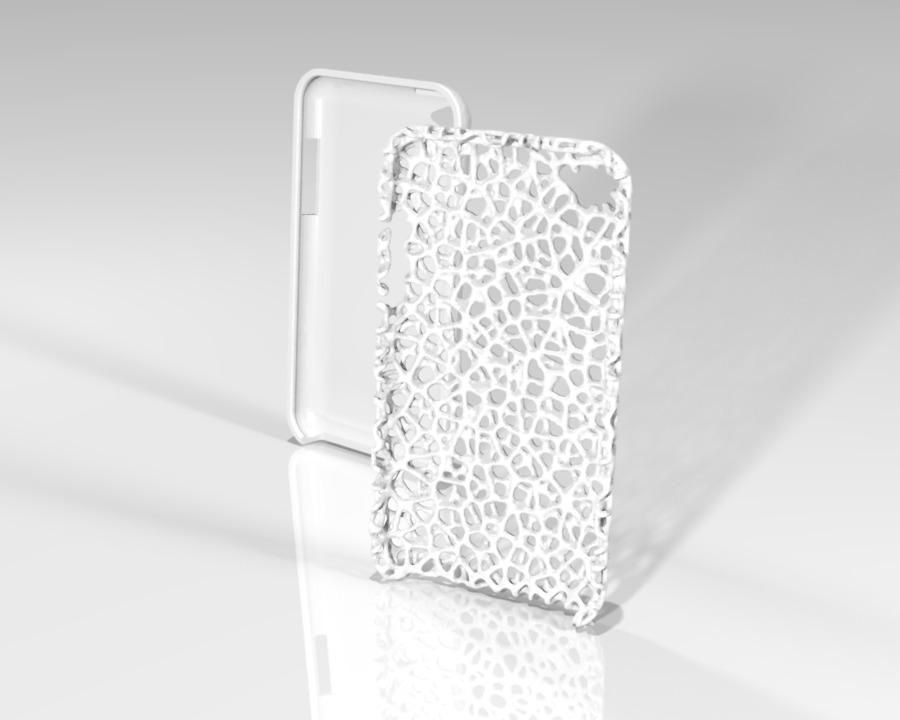
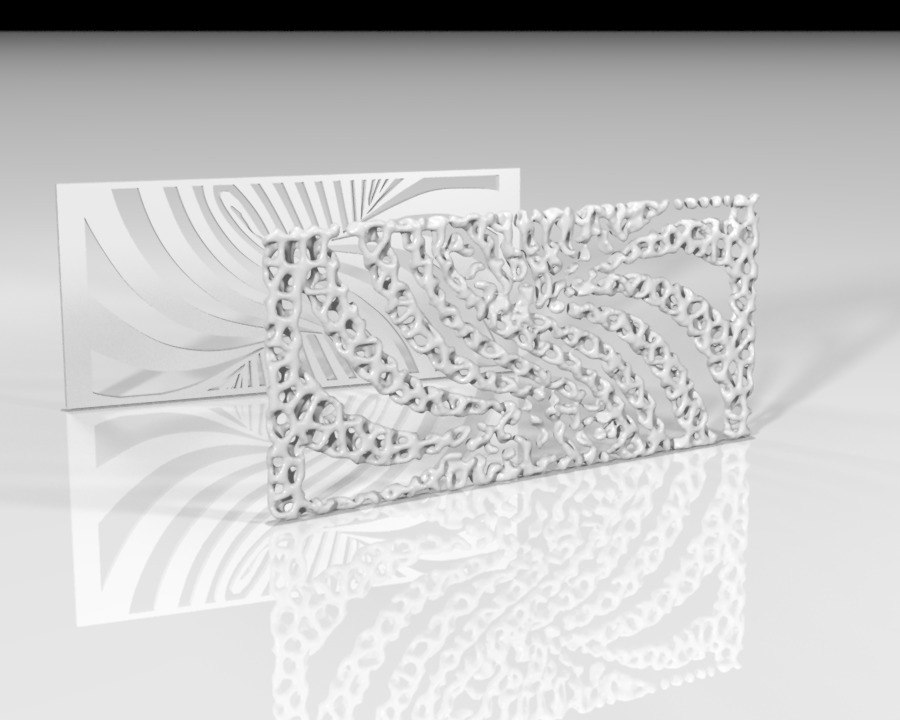
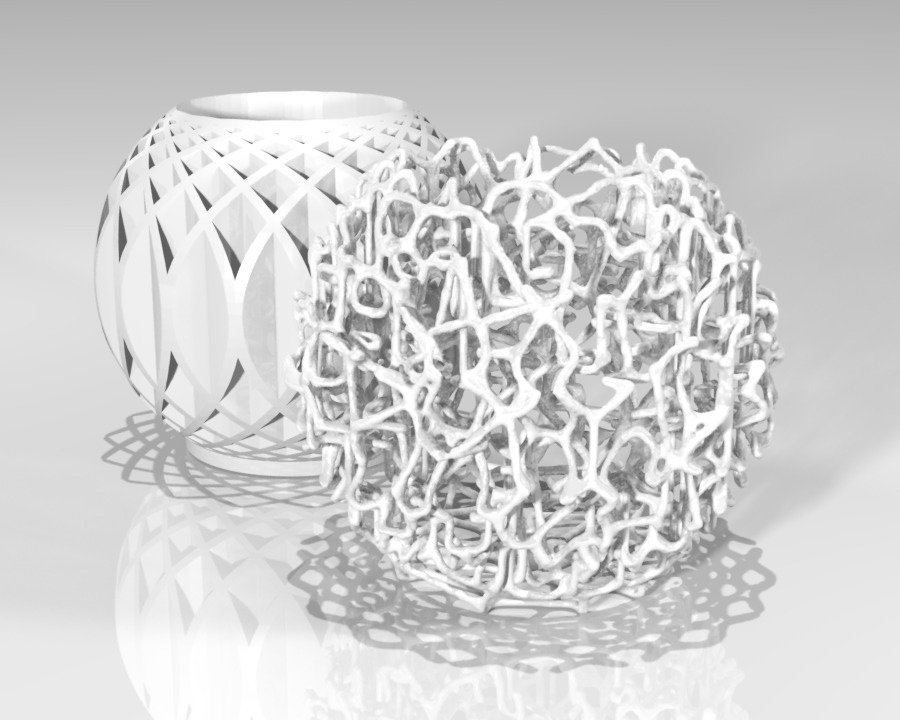
Voronoization turns the surface of a 3D model into such a net: the cells become holes, their borders become the walls of a lattice that keeps the shape of the model. What can you use it for?
Tip: lattices have many overhangs. Resin and SLS printers handle them easily; on filament (FDM) printers choose walls that aren't too thin and use supports if needed.
Currently supported formats for input are:
| STL | Stereolithography, binary and ASCII |
| PLY | Stanford Polygon Library |
| OBJ | Wavefront Object |
| OFF | Object File Format |
| DAE | Collada |
| 3DS | 3D Studio |
As output format we provide 3MF, PLY and STL (both binary) and OBJ. You can upload models of up to 20 MB.
Yeah, that can happen. Not all models are suitable for our Voronoization process.
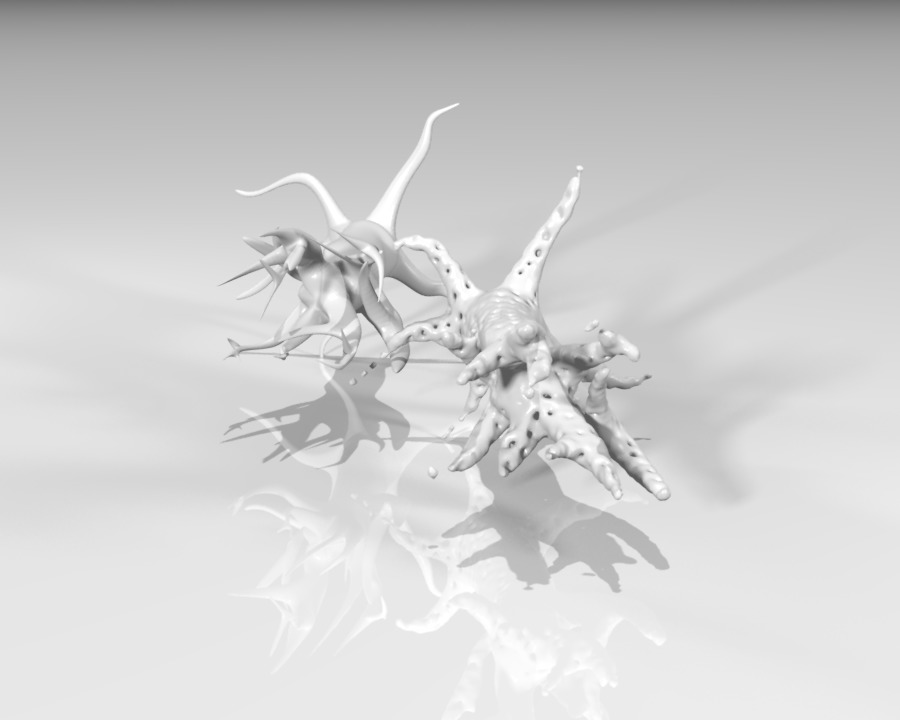
Take a look at the following models to get an idea what kind of models will not work.
Models with thin solids or convoluted structures will not work with our Voronoization process.

Voronoization is done with MeshLab (PyMeshLab), the 3D preview with three.js. The sample images were rendered with POV-Ray. The example model is the Stanford Bunny from the Stanford 3D Scanning Repository.